There’s a certain magic that happens when you master Using A French Press. It’s more than just brewing coffee; it’s an immersive experience that puts you in control, transforming simple beans into a rich, full-bodied elixir. Forget fleeting trends; the French Press has stood the test of time, offering a straightforward path to an exceptional cup that many coffee lovers swear by. If you’re ready to dive into the world of truly flavorful coffee, learning how to use a French Press is your first, best step.
A Brief History of the French Press
The journey of the French Press begins in the mid-19th century in France, though its exact origins are a bit murky, with several inventors laying claim to its design. The device as we largely know it today was patented by an Italian designer, Attilio Calimani, in 1929, and later refined by Faliero Bondanini in 1958. From those humble beginnings, it spread across Europe and eventually the world, becoming a beloved staple for coffee enthusiasts who appreciate its simplicity and the robust character of the brew it produces. This enduring design speaks volumes about its effectiveness and the timeless appeal of full-immersion brewing.
Why Choose the French Press for Your Morning Brew?
So, with countless ways to make coffee, why should you dedicate your mornings to using a French Press? The answer lies in the cup itself. French Press coffee stands out because it allows the coffee grounds to steep directly in hot water, extracting more of the bean’s natural oils and fine sediment that paper filters often block. This results in a brew that is:
- Rich and Full-Bodied: Expect a velvety texture and a depth of flavor that can feel almost decadent compared to drip coffee.
- Flavorful: Without a paper filter, the coffee’s essential oils remain in your cup, carrying nuanced aromas and tastes that truly capture the bean’s character.
- Simple and Accessible: It requires no electricity (beyond boiling water) and has few moving parts, making it incredibly reliable and easy to use anywhere.
- Environmentally Friendly: Since there are no disposable paper filters or plastic pods, it generates less waste, making it a sustainable choice for your daily ritual.
- Versatile: You have complete control over brew time, water temperature, and coffee-to-water ratio, allowing you to customize your coffee precisely to your taste.
It’s this blend of richness, simplicity, and control that makes using a French Press a cherished ritual for so many.
Understanding Your French Press: Components and Selection
Before you start brewing, it helps to know your tool. A French Press typically consists of a few key components:
Essential Parts of a French Press
- Carafe: This is the main body, usually made of glass, stainless steel, or ceramic, where the coffee steeps.
- Plunger: A rod with a mesh filter screen attached to the bottom. This is what you press down to separate the grounds from the brewed coffee.
- Lid: Sits atop the carafe and holds the plunger rod in place.
- Handle and Frame: Provides a way to hold and pour the French Press, often protecting the carafe.
Choosing the Right French Press
When picking out a French Press, consider these points:
- Material: Glass carafes let you see the brewing process but are fragile. Stainless steel is durable and retains heat well, while ceramic offers aesthetic appeal.
- Size: They come in various sizes, typically measured in cups (though a “cup” often means 4 oz/120ml). Choose one that fits your typical coffee consumption—a small 1-2 cup for solo enjoyment or a larger 8-cup for entertaining.
- Filter Quality: Look for a well-fitting, sturdy mesh filter that minimizes sediment. Some presses offer double-filtration systems for an even cleaner cup.
Mastering the Perfect Cup: Step-by-Step Guide to Using a French Press
Ready to brew? Here’s a detailed guide to using a French Press for a consistently delicious cup:
1. Gather Your Essentials
You’ll need:
- A French Press
- Freshly roasted whole bean coffee
- A Burr grinder (for the best results)
- Filtered water
- A kettle
- A timer (your phone works great!)
- A mug or server
2. Grind Your Beans Just Right
This is perhaps the most crucial step. For a French Press, you need a coarse, even grind. Think coarse sea salt or breadcrumbs. Too fine, and your coffee will be over-extracted, bitter, and leave a lot of muddy sediment. Too coarse, and it’ll be weak. Aim for a consistent grind size for even extraction.
3. Heat Your Water
Bring your filtered water to a boil, then remove it from the heat. Let it sit for about 30 seconds to a minute to reach the ideal brewing temperature, typically between 195°F and 205°F (90°C-96°C). Water that’s too hot can scorch the coffee, resulting in a harsh taste.
4. Add Coffee and Water
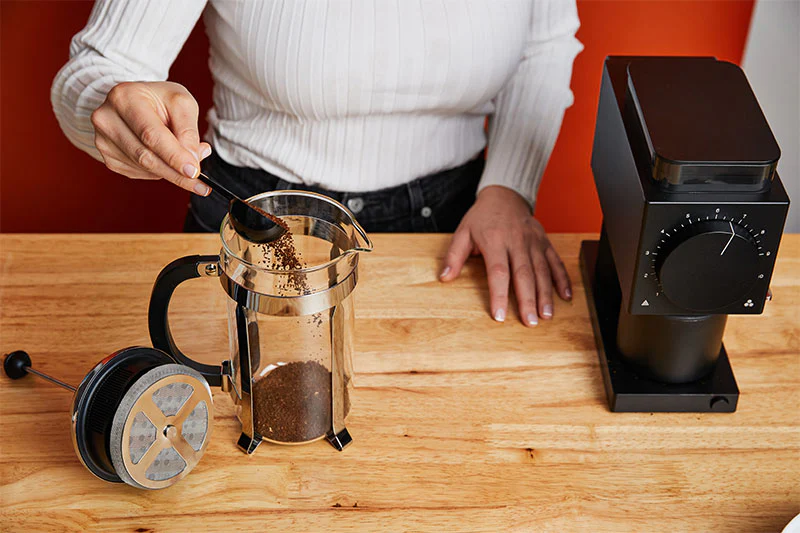
For a good starting point, use a coffee-to-water ratio of 1:15 or 1:16. This means for every 1 gram of coffee, use 15 or 16 grams of water. If you don’t have a scale, about one heaping tablespoon of coarse coffee grounds per 6 ounces (180ml) of water is a rough estimate. Place the grounds in the bottom of your pre-warmed French Press carafe. Pour about half of your hot water over the grounds, ensuring they are fully saturated.
5. Let it Bloom (and Steep!)
After adding the first pour of water, stir gently with a non-metallic spoon. This helps all the grounds get wet, a process called “blooming,” which allows gases to escape. Then, pour in the remaining water. Place the lid on top, with the plunger resting just above the water—do not press down yet! Start your timer. The ideal steep time is usually 4 minutes. Some experts, like Master Roaster Clara Beaumont, suggest “The French Press isn’t just a brewing device; it’s a testament to patience and simplicity, rewarding you with the truest expression of a coffee bean’s character.” For a stronger, fuller flavor with a coarse grind, some methods extend this to 6-8 minutes, but 4 minutes is a great starting point.
6. Press Slowly and Steadily
Once your timer goes off, slowly and steadily press the plunger down. This should take about 20-30 seconds. If it’s too easy, your grind might be too coarse. If it’s very difficult, your grind might be too fine. You want a consistent, gentle resistance.
7. Pour and Enjoy
Immediately pour all the brewed coffee into your mug or a separate serving carafe. Leaving the coffee in the French Press with the grounds will lead to over-extraction and a bitter taste. Sip and savor your perfectly brewed cup!
Elevate Your French Press Experience: Tips and Tricks
What’s the secret to consistent French Press coffee?
Consistency is key, and understanding a few variables can transform your brew from good to great.
- The Importance of Grind Size: A consistent, coarse grind is paramount. Invest in a good burr grinder if you’re serious about your coffee. This prevents sediment and bitterness.
- Water Temperature Matters: Always use water that’s just off the boil. Too hot, and you’ll extract unpleasant flavors; too cool, and your coffee will be weak and under-extracted.
- Don’t Rush the Bloom: The initial pour and gentle stir help release carbon dioxide, allowing for better flavor extraction during the main steep.
- Stir for Consistency: A quick stir after the initial pour ensures all coffee grounds are fully immersed and extracting evenly.
- Decant Immediately: As mentioned, always pour out all your coffee immediately after pressing to stop the brewing process and prevent bitterness.
Cleaning and Maintaining Your French Press
Keeping your French Press clean is crucial for delicious coffee and its longevity.
How do I clean my French Press properly?
Proper cleaning prevents old coffee oils from building up and tainting future brews.
After each use:
- Discard Grounds: Scoop out the used coffee grounds.
- Rinse: Rinse the carafe, plunger, and lid with warm water.
- Wash: Disassemble the plunger (if possible) and wash all parts with mild soap and warm water. Use a brush to get into the mesh filter.
- Dry: Dry all components thoroughly to prevent water spots and rust.
Periodically, you can do a deeper clean by soaking the metal parts in a solution of warm water and white vinegar to remove stubborn oil residues.
Beyond Coffee: Creative Uses for Your French Press
Your French Press isn’t just a one-trick pony. It’s a surprisingly versatile tool in the kitchen!
Can a French Press be used for anything other than hot coffee?
Absolutely! Its simple design makes it useful for a variety of tasks beyond your morning brew.
- Cold Brew Coffee: For a smooth, less acidic coffee concentrate, combine coarse grounds and cold water in your French Press. Steep in the fridge for 12-24 hours, then press.
- Brewing Loose Leaf Tea: It’s an excellent way to steep loose leaf teas, giving the leaves plenty of room to expand and release their full flavor, then easily separating them from your brew.
- Frothing Milk: Heat milk gently on the stovetop, then pour it into your French Press. Rapidly pump the plunger up and down for about 30-60 seconds to create foamy, frothy milk for lattes and cappuccinos.
- Infusing Oils or Waters: Use it to infuse olive oil with herbs or create fruit-infused water by pressing the ingredients after steeping.
French Press FAQs
What is the ideal grind size for a French Press?
The ideal grind size is coarse, resembling coarse sea salt or breadcrumbs. A fine grind will lead to over-extraction and a muddy cup, while an overly coarse grind can result in weak coffee.
How long should I brew coffee in a French Press?
A common recommendation is 4 minutes. However, some prefer 6-8 minutes for a richer extraction with a coarse grind, especially for specialty coffees. Experiment to find your personal sweet spot.
What water temperature is best for French Press?
The best water temperature is between 195°F and 205°F (90°C-96°C). Let freshly boiled water sit for 30-60 seconds before pouring to reach this range.
Can I use pre-ground coffee in a French Press?
While fresh whole beans ground just before brewing are always best, you can use pre-ground coffee. Just make sure it’s explicitly labeled “coarse ground” for French Press, as standard pre-ground coffee is often too fine.
How often should I clean my French Press?
You should rinse and wash your French Press thoroughly after every single use to prevent coffee oil residue from building up and impacting the taste of future brews.
Why does my French Press coffee taste bitter?
Bitterness in French Press coffee is usually due to over-extraction. This can be caused by coffee grounds that are too fine, water that’s too hot, or brewing for too long. Adjusting these factors should help.
Is a French Press good for travel?
Yes, French Presses are excellent for travel. They are often robust, require no electricity, and allow you to make great coffee anywhere you have access to hot water and fresh beans.
Conclusion
Mastering using a French Press is a rewarding endeavor that connects you more intimately with your coffee. It’s a method that values simplicity and patience, yielding a cup that’s uniquely rich, full-bodied, and bursting with the nuanced flavors of your chosen beans. By understanding the process, paying attention to the details of grind size and water temperature, and maintaining your equipment, you’ll unlock a world of incredible coffee experiences. So go ahead, experiment with different beans and ratios, and discover the joy of your perfect French Press brew. Your taste buds will thank you!