Are you a French Press enthusiast, always chasing that perfect, rich, full-bodied cup of coffee? Or perhaps you’re just starting your journey and wondering why your brew isn’t quite hitting the mark? The secret often lies in one crucial detail: your Ground Coffee For French Press. It’s more than just coffee beans; it’s about getting the grind just right to unlock an unparalleled flavor experience.
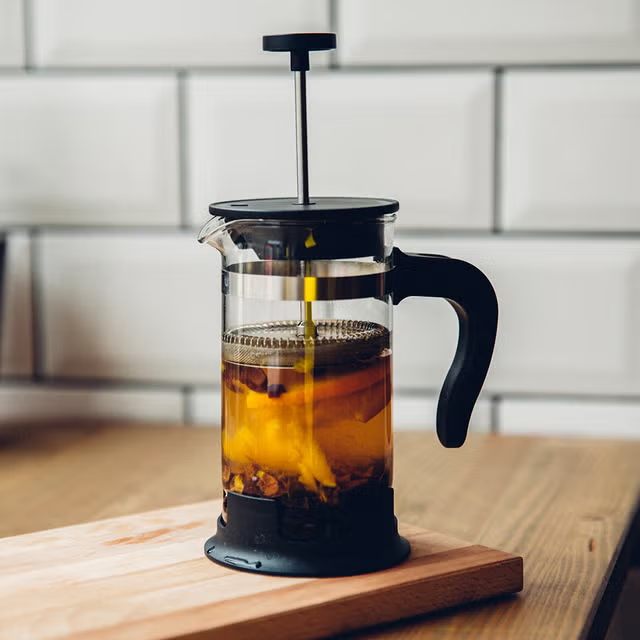
What Exactly is French Press Ground Coffee?
When we talk about the ideal ground coffee for French Press, we’re talking about a specific texture – a coarse grind. Imagine the consistency of coarse sea salt or steel-cut oats; that’s the sweet spot you’re aiming for. Each particle should be distinct and chunky, far from the fine, powdery feel of espresso grounds or the sand-like texture of drip coffee.
Why coarse, you ask? It all comes down to the unique brewing method of the French Press. Unlike other brewers that rely on paper filters, the French Press uses a mesh screen. A coarse grind ensures that these larger particles don’t slip through the filter, preventing a muddy, gritty cup. More importantly, it facilitates the extended steeping time that defines French Press brewing, allowing for a full and even extraction of flavors without over-extraction.
Why Grind Size Matters: The Science Behind Your Brew
The size of your coffee grounds has a profound impact on how water interacts with the coffee and, consequently, the taste of your final brew. This is where the science of extraction comes into play. Coffee grounds contain thousands of soluble compounds that contribute to flavor, aroma, and body. Hot water extracts these compounds. The speed and efficiency of this extraction depend heavily on the coffee’s surface area.
- Under-extraction (Too Coarse): If your grind is too coarse, there isn’t enough surface area for the hot water to extract all the desirable compounds within the typical French Press brewing time. The result? A weak, watery, and often sour cup of coffee, lacking depth and complexity. It tastes thin, almost like a ghost of what it should be.
- Over-extraction (Too Fine): On the flip side, if your grind is too fine, the increased surface area means the water extracts compounds too quickly. This leads to an abundance of bitter, harsh, and astringent flavors. You’ll likely notice a lingering bitterness, a heavy, unpleasant body, and potentially a lot of fine sediment at the bottom of your cup, which we lovingly call “sludge.” The mesh filter of a French Press simply isn’t designed to handle fine particles effectively, making them pass through and contribute to that undesirable muddiness.
Expert barista, Clara Beaumont, often says, “The grind size for your French Press is like the volume knob on your amplifier. Too low, and you miss the song; too high, and it’s just noise. Find that perfect middle ground, and the music of your coffee truly sings.”
Achieving the Perfect Grind: Your Grinder Options
To truly master the art of French Press, investing in a good coffee grinder is non-negotiable. While pre-ground coffee offers convenience, freshly ground beans ensure maximum freshness and flavor.
Burr Grinders: The Champion’s Choice
For consistent and precise grounds, a burr grinder is your best friend. Burr grinders work by crushing coffee beans between two abrasive surfaces (burrs), ensuring an even and uniform particle size. This consistency is paramount for an even extraction, which in turn leads to a balanced and delicious cup of French Press coffee.
- Electric Burr Grinders: These are convenient and fast, offering a range of settings from fine to coarse. Brands like Baratza Encore are often recommended for their quality and reliability at an entry-level price.
- Manual Burr Grinders: For those who enjoy a more hands-on approach or need a portable option, hand grinders are excellent. They require a bit of arm work but offer precise control and are often more affordable.
Blade Grinders: A Compromise
Blade grinders, which operate more like blenders, chop coffee beans with a spinning blade. This method is inexpensive but creates an inconsistent grind with varying particle sizes—from fine dust to large chunks. This inconsistency leads to uneven extraction, meaning some particles will be over-extracted (bitter) while others are under-extracted (sour), resulting in a less-than-ideal cup. If a blade grinder is your only option, try grinding in short pulses and shaking the grinder between pulses to minimize unevenness.
Grinding Your Own: A Step-by-Step Guide
Grinding your own coffee for French Press is simpler than it sounds, and it makes all the difference.
- Select Your Beans: Start with high-quality, fresh whole beans. The roast level is a personal preference, but many find medium to dark roasts shine in a French Press, offering rich, bold flavors.
- Set Your Grinder: Adjust your burr grinder to a coarse setting. If it has numbered settings, start around the coarser end and experiment. Remember, you’re looking for grounds that resemble coarse sea salt.
- Grind Just Before Brewing: Coffee begins to lose its aroma and flavor compounds rapidly once ground. For the freshest taste, grind your beans immediately before you plan to brew.
- Check the Texture: After grinding, take a moment to inspect the grounds. They should feel gritty, not powdery, and you should be able to distinguish individual particles.
Can You Use Pre-Ground Coffee for French Press?
Yes, you can use pre-ground coffee for French Press, especially if convenience is a priority. However, there are a few caveats:
- Look for “Coarse Grind” or “French Press Grind”: Some brands specifically label their pre-ground coffee for French Press. This is your best bet.
- Avoid “Drip” or “Espresso” Grinds: These are too fine for a French Press and will lead to sediment and bitterness.
- Freshness is Key: Pre-ground coffee loses its freshness faster than whole beans. If you buy pre-ground, store it in an airtight container in a cool, dark place to preserve its flavor for as long as possible. While it won’t be as vibrant as freshly ground, a good quality, correctly ground pre-ground coffee can still yield a decent cup.
Troubleshooting Your French Press Grind
Even with the best intentions, things can sometimes go awry. Here’s how to diagnose and fix common grind-related issues:
- Your Coffee Tastes Bitter and Gritty: This is a classic sign your grounds are too fine. The fine particles are passing through the mesh filter and over-extracting. Adjust your grinder to a coarser setting.
- Your Coffee Tastes Weak and Sour: Your grounds are likely too coarse, leading to under-extraction. Fine-tune your grinder to a slightly finer setting to allow for more efficient extraction.
- Too Much Sludge at the Bottom: Again, a sign of too-fine grounds or an inconsistent grind. Ensure you’re using a burr grinder set to a consistent coarse setting.
Remember, brewing coffee is an art, but it’s also a science. Small adjustments to your grind can significantly alter the final taste. Don’t be afraid to experiment!
Beyond the Basics: Tips for the Ultimate French Press Experience
While grind size is paramount, it’s part of a symphony of variables that contribute to a perfect French Press.
- Water Temperature: Aim for water just off the boil, ideally between 200-205°F (93-96°C). Boiling water can scald the coffee, leading to harsh flavors, while water that’s too cool won’t extract effectively.
- Brew Time: The sweet spot is typically 4 minutes for a coarse grind. Some enthusiasts, like coffee connoisseur Dr. Elias Thorne, advocate for slightly longer brew times (6-8 minutes) with a very coarse grind for a richer profile. Experiment within this range to find your preferred intensity.
- Coffee-to-Water Ratio: A common starting point is a 1:15 ratio (e.g., 60 grams of coffee for 900 ml of water). Adjust this ratio to suit your strength preference; more coffee for a stronger brew, less for a milder one.
- The Bloom: After pouring the initial hot water over the grounds, give it a gentle stir and let it sit for about 30 seconds. This allows the coffee to “bloom” as trapped gases escape, leading to a more even extraction.
- Gentle Plunge: When it’s time to press, do it slowly and steadily, taking about 20-30 seconds. A rapid plunge can agitate the grounds, potentially forcing fine particles through the filter and disturbing the settled sediment.
Care and Cleaning of Your French Press and Grinder
Proper maintenance ensures the longevity of your equipment and the quality of your coffee.
- French Press: After each use, discard the grounds (compost them if possible!). Disassemble the plunger and wash all parts with warm, soapy water. Pay special attention to the mesh filter, as old coffee oils can cling to it and impart stale flavors to future brews.
- Grinder: Regularly clean your burr grinder according to the manufacturer’s instructions. Coffee oils and fine particles can build up, affecting performance and flavor. Use a brush to clear out residual grounds.
Conclusion
The journey to an exceptional cup of French Press coffee begins long before the hot water meets the grounds. It starts with understanding and mastering the art of the grind. By prioritizing a consistent, coarse grind for your French Press, you unlock a world of rich flavors, bold aromas, and a truly satisfying coffee experience. So, go forth, experiment with your grinder, savor the process, and elevate your everyday brew to an extraordinary ritual. Your French Press—and your taste buds—will thank you.