Ever found yourself craving that intense, rich shot of espresso but don’t own a fancy machine? You’re not alone! Many coffee lovers wonder if their trusty French press can step up to the challenge. The good news is, while a French press can’t conjure a true espresso in the traditional sense, it’s incredibly adept at brewing a strong, concentrated coffee that serves as a fantastic substitute for all your favorite espresso-based drinks. Get ready to unlock the full potential of your French press and transform your daily coffee ritual into an art form.
The Allure of French Press Espresso: Why Bother?
Why would anyone try to make “French Press Espresso” when dedicated machines exist? The answer often boils down to accessibility and versatility. Espresso machines can be a significant investment, both in cost and counter space. Your French press, a humble and often affordable device, offers a gateway to exploring deeply flavored coffee without breaking the bank. It’s perfect for crafting robust lattes, creamy cappuccinos, or invigorating Americanos right in your kitchen. This method champions full-bodied intensity, delivering a brew with exceptional character that stands up beautifully to milk or other additions.
Demystifying French Press Espresso: What It Is (and Isn’t)
Let’s get one thing straight: a French press cannot replicate the high-pressure extraction process that defines traditional espresso, nor will it produce that iconic layer of reddish-brown crema. True espresso requires specialized machinery to force hot water through finely ground coffee at nine bars of pressure.
So, what is French press espresso? It’s a method designed to create an exceptionally strong, highly concentrated coffee using a French press. Think of it as a super-charged French press brew—intense enough to mimic the strength and flavor profile needed for espresso-style beverages. As Eleanor Vance, a seasoned barista and coffee consultant, often says, “While the French press won’t give you the textbook crema of a true espresso, its ability to produce a bold, full-bodied concentrate makes it an invaluable tool for any home barista crafting milk drinks. It’s about working with what you have to create something truly delicious.”
Your Essential Toolkit: Gear for French Press Espresso
You likely already own most of what you need. Here’s a quick rundown to ensure you’re fully equipped:
- French Press: Obviously, the star of the show! Any size will do, but smaller presses (like 8-12 oz) are excellent for single or double “shots.”
- Coffee Grinder: A burr grinder is highly recommended. Consistency is key for French press espresso, and a burr grinder provides an even grind, which is crucial for optimal extraction and minimizing sediment.
- Kettle: A gooseneck kettle with temperature control offers precision, allowing you to hit that sweet spot for water temperature. If you don’t have one, a standard kettle will work – just be mindful of cooling time.
- Digital Scale: For consistent results, weighing your coffee beans and water is far more accurate than using volume measurements. This ensures you can replicate your perfect French press espresso every time.
- Timer: Even a simple phone timer will help you keep track of your steep time.
The Art of the Grind: Perfecting Your Coffee for a Strong Brew
When it comes to French press espresso, grind size is paramount. Unlike regular French press, which typically uses a coarse grind, you’ll want to aim for something finer, but not too fine.
Why Grind Size Matters for Your French Press Espresso
For this method, a medium-fine grind is your best friend. This is finer than traditional French press coffee but coarser than true espresso grind. Why the sweet spot?
- Too Coarse: Your coffee will be weak and under-extracted, lacking the intensity you need for an espresso substitute.
- Too Fine: This is where things get tricky with a French press. Ultra-fine grounds can slip through the mesh filter, leaving you with a muddy, gritty cup and potentially over-extracted, bitter flavors. It can also make plunging incredibly difficult.
A grind similar to sea salt or coarse sand is often ideal. It provides enough surface area for robust extraction without creating excessive sediment. Choosing a darker roast coffee can also enhance the rich, bold flavors typically associated with espresso, making your French press espresso taste even more authentic.
Step-by-Step Guide to Your Best French Press Espresso
Ready to brew? Follow these steps for a concentrated French press coffee that’s perfect for your espresso cravings.
- Measure and Grind the Coffee: Start with a higher coffee-to-water ratio than you’d use for regular French press. A good starting point is a 1:3 or 1:4 coffee-to-water ratio by weight. For example, for a strong “double shot,” try 30 grams of coffee to 90-120 ml of water. Grind your chosen beans to a medium-fine consistency.
- Heat Your Water: Bring fresh, filtered water to just off the boil, ideally between 200-205°F (93-95°C). If your kettle doesn’t have temperature control, boil the water and let it sit for about 30-60 seconds to cool slightly.
- Preheat Your Press: Pour a small amount of hot water into your French press, swirl it around, then discard. This helps maintain the brewing temperature for optimal extraction.
- Add Coffee Grounds: Carefully spoon your freshly ground coffee into the preheated French press. Gently shake the press to ensure the grounds are evenly distributed at the bottom.
- Pour and Bloom: Pour about half of your hot water over the grounds, ensuring they are fully saturated. Give it a gentle stir. This “blooming” phase (30 seconds) allows the coffee to degas, preparing it for better extraction and releasing wonderful aromas.
- Full Immersion & Steep: After the bloom, pour in the remaining hot water. Give it one more gentle stir to ensure all grounds are immersed. Place the lid on your French press, but don’t press the plunger down yet. Let the coffee steep for 3-5 minutes. For a stronger French press espresso, lean towards the longer end of the spectrum.
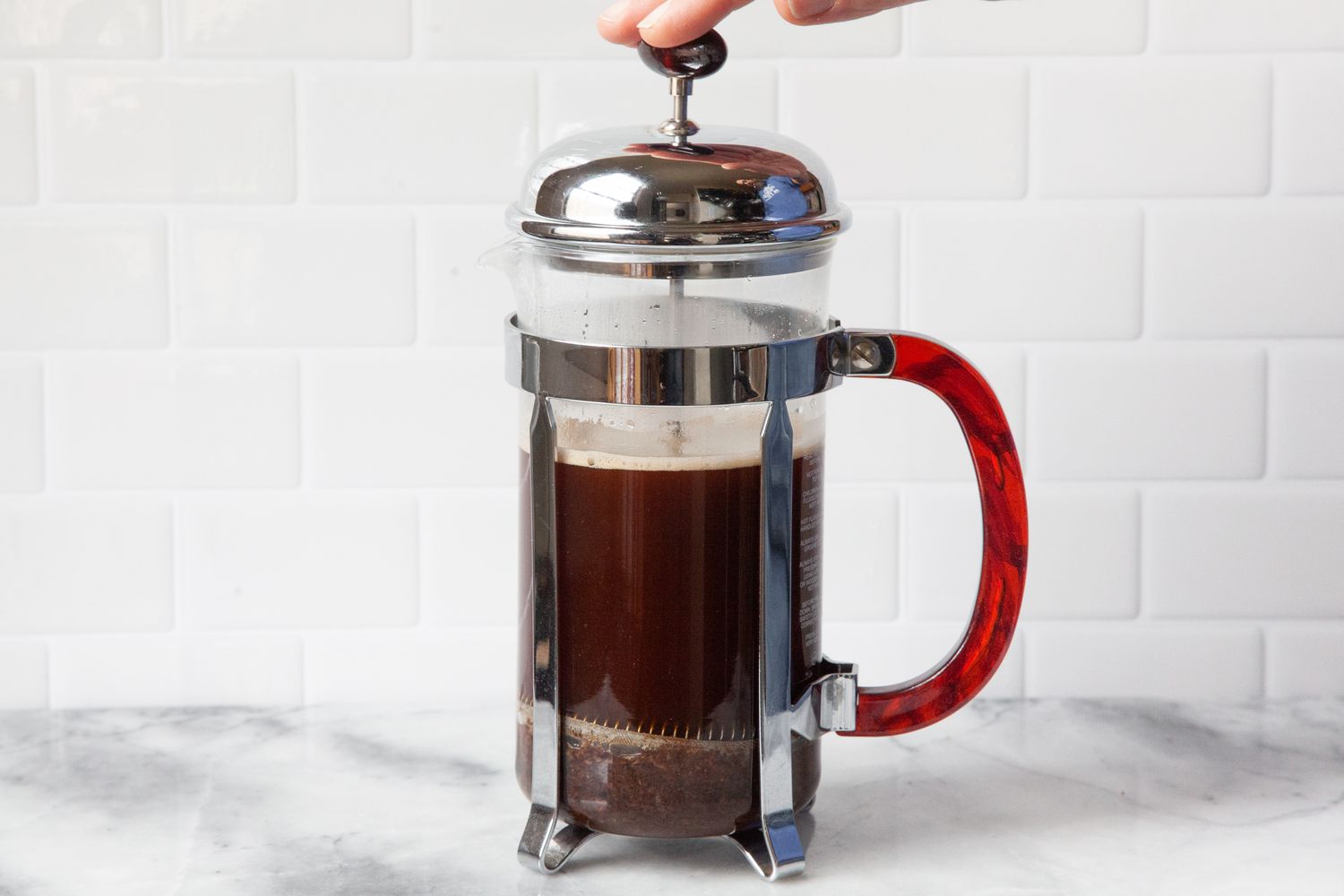
- The Plunge: Once steeped, slowly and steadily press the plunger all the way down. This should take about 30 seconds to a minute. Don’t rush it! A slow, consistent plunge ensures even separation of grounds and liquid, minimizing sediment. For an extra touch of foam that mimics crema, you can try plunging halfway, pulling up slightly, then pressing all the way down.
- Serve Immediately: Pour your concentrated French press espresso into a warmed cup right away. Leaving it in the press will continue the extraction process, potentially leading to bitterness.
Elevating Your Experience: Tips for French Press Espresso Excellence
Beyond the basic steps, a few expert tips can truly elevate your French press espresso game:
- Water Quality is Crucial: Just like any coffee, the quality of your water profoundly impacts flavor. Use filtered water to avoid off-flavors from chlorine or minerals.
- Experiment with Ratios: While we provided a starting point, your perfect French press espresso might require a slightly different coffee-to-water ratio. Don’t be afraid to experiment, adjusting the amount of coffee or water by a few grams until you hit your ideal strength and flavor.
- Embrace Temperature Control: Precision in water temperature is often overlooked. Water that’s too hot can burn the coffee and extract bitter notes, while water that’s too cool leads to under-extraction and a weak, sour brew.
- The Double Plunge for “Crema”: To get that visual cue of espresso, the “double plunge” technique involves pressing the plunger halfway down, pulling it back up slightly, then pressing it fully. This agitation can create a thin layer of foam, visually approximating crema.
- Filter for Clarity: If you find the sediment in French press espresso bothers you, you can pour your brewed coffee through a fine-mesh sieve or a paper filter (like those used in pour-overs) placed over your serving cup. This will result in a cleaner cup, though it might alter the body slightly.
Beyond the Shot: Creative French Press Espresso Drinks
Your French press espresso opens up a world of delicious possibilities beyond just a straight, strong cup. It’s the perfect base for:
- Lattes: Combine your French press espresso with steamed and frothed milk.
- Cappuccinos: Similar to lattes, but with more foam.
- Americanos: Dilute your concentrated brew with hot water for a classic Americano.
- Macchiatos: A shot of French press espresso “marked” with a dollop of frothed milk.
- Cold Brew Concentrate: While not hot espresso, your French press can excel at making a powerful cold brew concentrate. Use a coarse grind, a high coffee-to-water ratio, and let it steep in cold water for 12-24 hours in the fridge before plunging. This makes an excellent base for iced coffee or cold brew lattes.
- Frothing Milk in the Press: If you don’t have a milk frother, you can clean your French press, heat milk (on the stovetop or microwave), pour it into the press, and vigorously pump the plunger up and down to create silky, frothy milk for your drinks.
Caring for Your French Press: Maintenance & Cleaning
A clean French press is essential for delicious French press espresso.
- Daily Rinse: After each use, discard the grounds immediately, then rinse the press and plunger thoroughly with hot water.
- Deep Clean Regularly: At least once a week, disassemble your plunger (if possible) and wash all components with warm, soapy water. Use a brush to ensure no coffee oils or fine grounds are trapped in the mesh filter, as these can impart bitter, stale flavors to future brews.
- Prevent Clogs: Be mindful of the type of coffee grounds you dispose of. Avoid washing large amounts down the drain to prevent plumbing issues.
FAQ: Your French Press Espresso Questions Answered
Can a French press really make true espresso?
No, a French press cannot make true espresso. Traditional espresso requires high pressure (around 9 bars) to extract a concentrated shot with crema, which a French press cannot generate. However, it can brew a very strong, concentrated coffee that serves as an excellent substitute for espresso in various drinks.
What’s the ideal grind size for French press espresso?
The ideal grind size is medium-fine, which is finer than a regular French press grind but coarser than true espresso grind. This balance allows for robust extraction without excessive sediment or difficulty plunging.
How much coffee should I use for French press espresso?
A higher coffee-to-water ratio is key. A good starting point is a 1:3 or 1:4 ratio by weight (e.g., 30 grams of coffee to 90-120 ml of water) to achieve a concentrated brew.
What about crema when using a French press?
A French press will not produce a true crema. However, you can achieve a thin layer of foam by employing a “double plunge” technique, where you press the plunger halfway down, pull it up, then press fully. This creates agitation that can resemble crema.
Can I use pre-ground espresso coffee?
You can, but be cautious. Pre-ground espresso coffee is typically very fine for espresso machines and might be too fine for a French press, leading to excessive sediment and potential bitterness. If using, aim for a medium-fine grind if available, or be prepared for a grittier cup.
How long should I steep French press espresso?
A steep time of 3 to 5 minutes is generally recommended. For a more intense, stronger “espresso,” you might lean towards the 4-5 minute mark. Experiment to find your preferred strength.
Conclusion
The world of coffee is rich with possibilities, and your French press is far more versatile than you might imagine. While it may not pull a “textbook” espresso shot, mastering the art of French press espresso allows you to create incredibly rich, concentrated brews perfect for lattes, cappuccinos, and a host of other delightful coffee creations. It’s an accessible, satisfying way to elevate your home coffee experience and enjoy bold flavors without the need for expensive equipment. So, embrace the experiment, fine-tune your technique, and savor every robust drop from your French press—your personal gateway to coffee excellence.