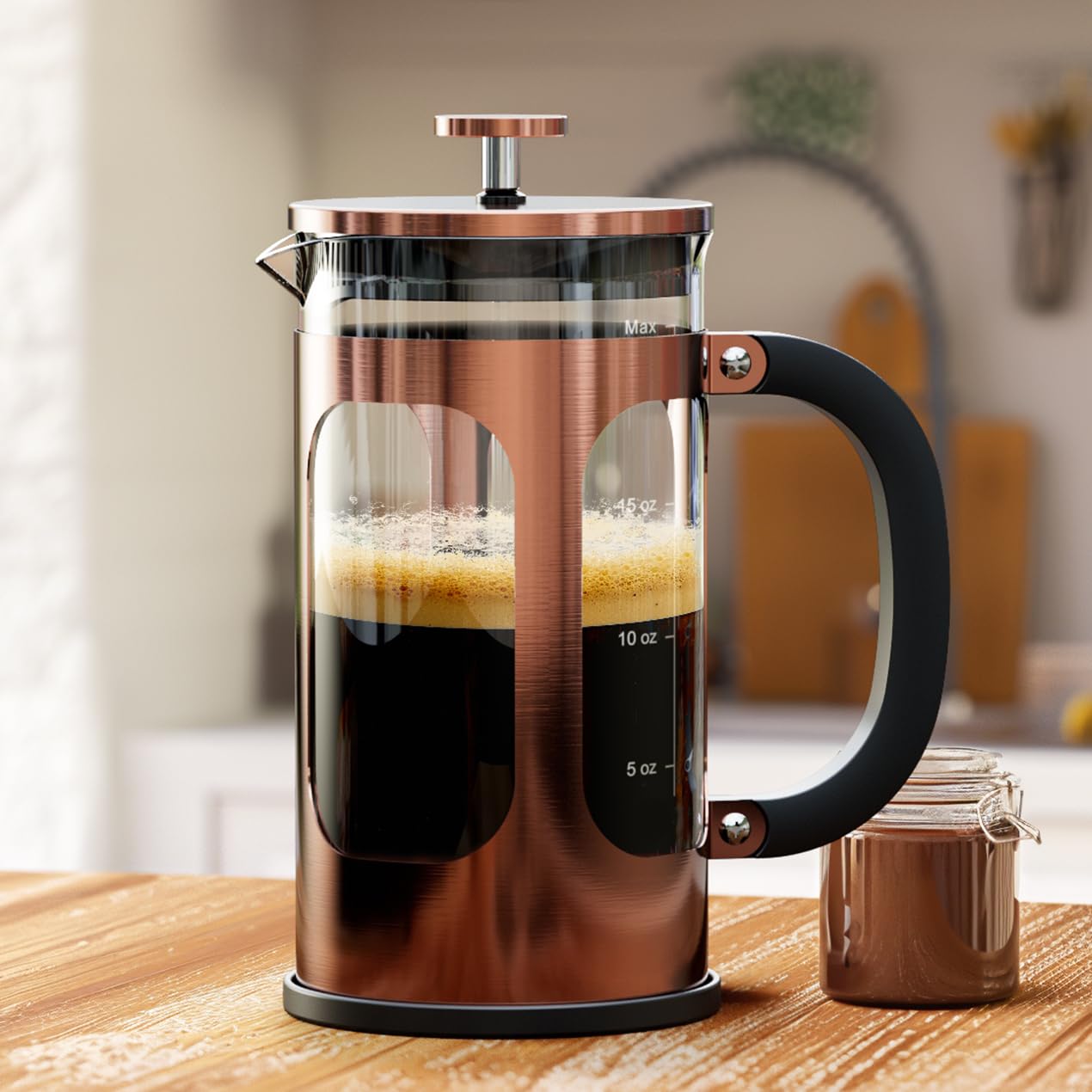
Picture this: you’ve got your favorite beans, fresh hot water, and your trusty French press ready to go. You’re just moments away from that rich, full-bodied cup of coffee you crave. But wait – there’s one crucial step that can make or break your entire French press experience, and it all starts with your Coffee Grinder For French Press. Many coffee lovers overlook the immense impact a quality grinder has on their brew, assuming any old grinder will do. However, achieving that signature French press flavor and avoiding a gritty, muddy cup hinges almost entirely on getting the right grind. It’s not just about turning beans into powder; it’s about precision, consistency, and unlocking the full potential of your coffee.
Why Your Grinder Matters: The Heart of French Press Coffee
When it comes to French press, the way your coffee beans are ground is absolutely foundational. Unlike drip coffee or espresso, the French press is an immersion brewer, meaning coffee grounds steep directly in hot water for several minutes. This method demands a very specific type of grind to deliver the best results.
Grind Consistency is King
Imagine trying to bake a cake with some flour finely sifted and some still in coarse chunks – it wouldn’t turn out well, would it? The same principle applies to your coffee. For French press, you need a consistently coarse and uniform grind. If your grinder produces a mix of very fine particles (called “fines”) and larger, uneven chunks, you’re setting yourself up for trouble. Fines will over-extract quickly, leading to bitter, astringent flavors, while the larger pieces will under-extract, resulting in a weak, sour taste. A uniform grind ensures that all coffee particles extract at roughly the same rate, giving you a balanced and delicious cup.
Avoiding “Fines” and Sludge
One of the most common complaints about French press coffee is sediment or “sludge” at the bottom of the cup. While a certain amount of fines is unavoidable with any brewing method, a good coffee grinder for French press minimizes these unwanted particles. Blade grinders, notorious for their inconsistent results, create a lot of fines, which easily slip through the French press filter, turning your cup into a muddy mess. A quality burr grinder, on the other hand, provides a clean, coarse grind that significantly reduces sediment, allowing you to enjoy the rich, clear flavors without the gritty texture.
Burr Grinders vs. Blade Grinders: A Clear Winner
This isn’t a fair fight – for French press, there’s a definite champion.
The Superiority of Burr Grinders
A burr grinder works by crushing coffee beans between two abrasive surfaces, or “burrs.” These burrs are designed to produce a highly consistent particle size. They come in two main types: conical and flat. Both are excellent choices for French press as they allow for precise control over the grind size, from very coarse to very fine. This consistency is vital for proper extraction and a clean cup. “The right grind consistency is paramount for French press,” explains Dr. Anya Sharma, a renowned coffee scientist and barista trainer. “Without it, you risk either over-extracting bitter notes from fines or under-extracting a weak, sour brew from inconsistent, larger particles. Your grinder is truly the unsung hero of a great French press cup.”
Why Blade Grinders Fall Short for French Press
Blade grinders, often found at lower price points, don’t actually grind coffee; they chop it with spinning blades, similar to a blender. This action creates a highly inconsistent mix of coarse chunks and a significant amount of “coffee dust” or fines. As mentioned, these fines are the enemy of a good French press. They lead to over-extraction, bitterness, and an unpleasantly muddy cup full of sediment that easily passes through the French press mesh filter. If you’re serious about your French press coffee, a blade grinder simply won’t cut it.
Electric vs. Manual Coffee Grinders for French Press
Both electric and manual burr grinders can produce excellent results for French press, each with its own advantages.
The Convenience of Electric Grinders
Electric burr grinders offer speed and convenience. With the push of a button, you can quickly grind a batch of beans, making them ideal for busy mornings or when you’re brewing for multiple people. Many electric models feature various grind settings, allowing you to easily dial in the perfect coarse grind for your French press. Popular choices like the Baratza Encore and Breville Smart Grinder Pro are often lauded for their consistent coarse grinds and user-friendly designs. While they can be a bit more of an investment, the time-saving and consistent results are often well worth it for daily brewers.
The Precision and Portability of Manual Grinders
Manual hand grinders require a bit of elbow grease, but they offer exceptional control over the grind and are often praised for their portability and quiet operation. For many, the ritual of hand grinding adds to the coffee experience. High-quality manual grinders, such as the 1Zpresso K Ultra or Timemore C3, use robust burr sets that produce incredibly consistent coarse grinds, rivaling many electric models. They’re perfect for travelers, campers, or anyone who appreciates a quieter, more hands-on approach to their morning brew.
What to Look for in a French Press Coffee Grinder
Choosing the right coffee grinder for French press can feel daunting with so many options available. Here’s what to prioritize:
Adjustable Grind Settings
This is non-negotiable. A good grinder for French press must have a wide range of adjustable settings, specifically allowing for a coarse grind. The ability to fine-tune your grind is crucial for experimentation and perfecting your brew. Look for grinders with clear, distinct settings rather than vague “coarse” options.
Conical vs. Flat Burrs
Both conical and flat burrs are effective. Conical burrs are generally quieter and generate less heat, which helps preserve the coffee’s flavor. Flat burrs often produce a slightly more uniform particle distribution, though the difference is often subtle for coarse grinds like French press. Ultimately, a quality burr set, regardless of type, is what truly matters.
Durability and Build Quality
Investing in a well-built grinder means it will last longer and maintain its consistency over time. Look for models with sturdy materials, high-quality burrs (steel or ceramic are common), and a reliable motor (for electric grinders). While there are budget-friendly options, be wary of overly cheap grinders that might compromise on burr quality and longevity.
Ease of Use and Cleaning
A grinder should enhance your coffee ritual, not complicate it. Choose a model that’s easy to operate and straightforward to clean. Removable hoppers and burr sets make cleaning a breeze, which is important for preventing old coffee oils from tainting your fresh beans.
Top Picks: Our Recommended Coffee Grinders for French Press
Based on consistency, durability, and user experience, here are some excellent choices for your French press needs:
Best Overall Value: Baratza Encore
The Baratza Encore is a long-standing favorite in the coffee community. It offers 40 distinct grind settings, excellent grind consistency for medium to coarse grinds, and a sturdy build, all at a very reasonable price. It’s often recommended as an entry-level serious grinder that delivers far beyond its cost.
Premium Performance: Fellow Ode Gen 2 / Fellow Opus
For those looking for a step up in performance and aesthetics, the Fellow Ode Gen 2 or its more versatile sibling, the Fellow Opus, are fantastic. These grinders boast flat burrs designed for filter coffee, providing exceptional grind consistency, and come with a sleek design. The Opus, in particular, offers a wider grind range, making it suitable for French press and beyond.
Top Manual Grinder: 1Zpresso K Ultra
If you prefer a manual grinder, the 1Zpresso K Ultra is a powerhouse. Known for its incredible precision and robust build quality, it offers micro-adjustments that allow you to dial in the perfect coarse grind for your French press with remarkable consistency. It’s an investment, but one that coffee enthusiasts rave about for its performance.
Budget-Friendly Options: OXO Brew Conical Burr Grinder / JavaPresse Manual
For those on a tighter budget who still want a burr grinder, the OXO Brew Conical Burr Grinder offers a solid electric option that performs well for French press. Alternatively, the JavaPresse Manual Coffee Grinder is a very affordable hand grinder that provides a much better grind than any blade grinder, making it a great entry point into quality grinding.
Achieving the Perfect Coarse Grind for French Press
So, what exactly does a coarse grind look and feel like?
Visual Cues and Texture
For French press, you’re aiming for coffee particles that resemble coarse sea salt or breadcrumbs. They should be distinct and not feel powdery or dusty when rubbed between your fingers. If it looks like table salt or sand, it’s too fine. If you see whole bean pieces, it’s too coarse.
Fine-Tuning Your Grind Setting
Every grinder is a little different, and even different beans can require slight adjustments. Start with your grinder’s recommended coarse setting for French press. Brew a cup, then taste it.
- Too bitter or muddy? Your grind is likely too fine. Adjust to a slightly coarser setting.
- Too weak or sour? Your grind might be too coarse, or your extraction time too short. Try a slightly finer grind or extend your brew time.
Don’t be afraid to experiment! This iterative process is how you truly master your French press.
FAQ
- What’s the ideal grind size for French press?
The ideal grind size for French press is coarse, resembling coarse sea salt or breadcrumbs. This allows for proper extraction during the longer immersion time without over-extracting bitter flavors or creating excessive sediment. - Can I use a blade grinder for French press?
While you can technically use a blade grinder, it’s highly discouraged for French press. Blade grinders produce an inconsistent grind with many fine particles, leading to bitter flavors and a muddy, gritty cup. A burr grinder is always recommended for superior results. - How much should I spend on a French press grinder?
You can find excellent burr grinders for French press in the $100-$200 range, such as the Baratza Encore. More premium options can go higher, and quality manual grinders can be found for $50-$150. Investing in a good burr grinder is one of the best ways to improve your coffee. - Are manual grinders good for French press?
Yes, high-quality manual burr grinders are excellent for French press. They offer precise grind consistency, portability, and are much quieter than electric models. Many manual grinders, like the 1Zpresso K Ultra, deliver exceptional performance. - How do I clean my coffee grinder?
Regular cleaning is crucial. For most burr grinders, you can disassemble the burrs and brush away old coffee grounds with a stiff brush. Some grinders also benefit from running specialized grinder cleaning tablets through them occasionally to remove built-up coffee oils. Always refer to your grinder’s manual for specific cleaning instructions.
Conclusion
The journey to an exceptional French press coffee begins long before the hot water meets the grounds – it starts with the humble yet mighty coffee grinder for French press. A high-quality burr grinder delivering a consistent coarse grind is the single most impactful upgrade you can make to your French press ritual. It transforms a potentially muddy, inconsistent brew into a rich, full-bodied, and clean cup that truly showcases your beans. So, take the plunge, invest in a good grinder, and elevate your French press experience from good to absolutely legendary. Your taste buds will thank you!